 |
Sane C++ Libraries
C++ Platform Abstraction Libraries
|
|
Sane C++ Libraries
C++ Platform Abstraction Libraries
|
Starts monitoring a signal, notifying about its reception. More...
#include <Async.h>
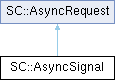
Classes | |
| struct | CompletionData |
| struct | Result |
Public Member Functions | |
| SC::Result | start (AsyncEventLoop &eventLoop, int num, AsyncSignalOptions options={}) |
| Sets async request members and calls AsyncEventLoop::start. | |
| Result | start (AsyncEventLoop &eventLoop) |
| Shortcut for AsyncEventLoop::start. | |
 Public Member Functions inherited from SC::AsyncRequest Public Member Functions inherited from SC::AsyncRequest | |
| void | setDebugName (const char *newDebugName) |
| void | executeOn (AsyncSequence &sequence) |
| Adds the request to be executed on a specific AsyncSequence. | |
| Result | executeOn (AsyncTaskSequence &task, ThreadPool &pool, AsyncThreadPoolMode mode=AsyncThreadPoolMode::NativePreferred) |
| Adds the request to be executed on a specific AsyncTaskSequence. | |
| void | disableThreadPool () |
| Disables the thread-pool usage for this request. | |
| AsyncRequest (Type type) | |
| Constructs a free async request of given type. | |
| Result | stop (AsyncEventLoop &eventLoop, Function< void(AsyncResult &)> *afterStopped=nullptr) |
| Ask to stop current async operation. | |
| bool | isFree () const |
Returns true if this request is free. | |
| bool | isCancelling () const |
Returns true if this request is being cancelled. | |
| bool | isActive () const |
Returns true if this request is active or being reactivated. | |
| Type | getType () const |
| Returns request type. | |
| Result | start (AsyncEventLoop &eventLoop) |
| Shortcut for AsyncEventLoop::start. | |
| void | setUserFlags (uint16_t externalFlags) |
| Sets user flags, holding some meaningful data for the caller. | |
| uint16_t | getUserFlags () const |
| Gets user flags, holding some meaningful data for the caller. | |
| Function< void(AsyncResult &)> * | getCloseCallback () |
| Returns currently set close callback (if any) passed to AsyncRequest::stop. | |
| const Function< void(AsyncResult &)> * | getCloseCallback () const |
Public Attributes | |
| Function< void(Result &)> | callback |
| Called when the signal is raised. | |
| Public Attributes inherited from SC::AsyncRequest | |
| AsyncRequest * | next = nullptr |
| AsyncRequest * | prev = nullptr |
Friends | |
| struct | AsyncEventLoop |
Additional Inherited Members | |
| Public Types inherited from SC::AsyncRequest | |
| enum class | Type : uint8_t { LoopTimeout , LoopWakeUp , LoopWork , ProcessExit , Signal , SocketAccept , SocketConnect , SocketSend , SocketSendTo , SocketReceive , SocketReceiveFrom , FileRead , FileWrite , FileSend , FileReadiness , ExternalCompletion , FileSystemOperation } |
| Type of async request. More... | |
| Protected Member Functions inherited from SC::AsyncRequest | |
| Result | checkState () |
| void | queueSubmission (AsyncEventLoop &eventLoop) |
| AsyncTaskSequence * | getTask () |
| bool | isThreadPoolForced () const |
| Protected Attributes inherited from SC::AsyncRequest | |
| AsyncSequence * | sequence = nullptr |
Starts monitoring a signal, notifying about its reception.
AsyncSignal follows the base AsyncRequest lifecycle: after a delivered signal, the request is completed unless the callback calls Result::reactivateRequest(true). AsyncSignalOptions::mode and coalesce are kept as explicit policy fields for future backend-parity work, but portable code should not rely on them for automatic reactivation.
On POSIX systems, signals like SIGINT, SIGTERM, SIGHUP are supported. On Windows, console control signals CTRL_C_EVENT, CTRL_BREAK_EVENT, and CTRL_CLOSE_EVENT are mapped to SIGINT (2), signal 21, and SIGTERM (15) respectively.
Signal watcher capabilities:
| Result SC::AsyncRequest::start | ( | AsyncEventLoop & | eventLoop | ) |
Shortcut for AsyncEventLoop::start.
| SC::Result SC::AsyncSignal::start | ( | AsyncEventLoop & | eventLoop, |
| int | num, | ||
| AsyncSignalOptions | options = {} ) |
Sets async request members and calls AsyncEventLoop::start.
| Function<void(Result&)> SC::AsyncSignal::callback |
Called when the signal is raised.
 1.12.0