 |
Sane C++ Libraries
C++ Platform Abstraction Libraries
|
|
Sane C++ Libraries
C++ Platform Abstraction Libraries
|
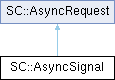
Starts monitoring a signal, notifying about its reception. More...
#include <Async.h>
Classes | |
| struct | CompletionData |
| struct | Result |
Public Member Functions | |
| SC::Result | start (AsyncEventLoop &eventLoop, int num, AsyncSignalOptions options={}) |
| Sets async request members and calls AsyncEventLoop::start. | |
| Result | start (AsyncEventLoop &eventLoop) |
| Shortcut for AsyncEventLoop::start. | |
 Public Member Functions inherited from SC::AsyncRequest Public Member Functions inherited from SC::AsyncRequest | |
| void | setDebugName (const char *newDebugName) |
| void | executeOn (AsyncSequence &sequence) |
| Adds the request to be executed on a specific AsyncSequence. | |
| Result | executeOn (AsyncTaskSequence &task, ThreadPool &pool) |
| Adds the request to be executed on a specific AsyncTaskSequence. | |
| void | disableThreadPool () |
| Disables the thread-pool usage for this request. | |
| AsyncRequest (Type type) | |
| Constructs a free async request of given type. | |
| Result | stop (AsyncEventLoop &eventLoop, Function< void(AsyncResult &)> *afterStopped=nullptr) |
| Ask to stop current async operation. | |
| bool | isFree () const |
Returns true if this request is free. | |
| bool | isCancelling () const |
Returns true if this request is being cancelled. | |
| bool | isActive () const |
Returns true if this request is active or being reactivated. | |
| Type | getType () const |
| Returns request type. | |
| Result | start (AsyncEventLoop &eventLoop) |
| Shortcut for AsyncEventLoop::start. | |
| void | setUserFlags (uint16_t externalFlags) |
| Sets user flags, holding some meaningful data for the caller. | |
| uint16_t | getUserFlags () const |
| Gets user flags, holding some meaningful data for the caller. | |
| Function< void(AsyncResult &)> * | getCloseCallback () |
| Returns currently set close callback (if any) passed to AsyncRequest::stop. | |
| const Function< void(AsyncResult &)> * | getCloseCallback () const |
Public Attributes | |
| Function< void(Result &)> | callback |
| Called when the signal is raised. | |
| Public Attributes inherited from SC::AsyncRequest | |
| AsyncRequest * | next = nullptr |
| AsyncRequest * | prev = nullptr |
Friends | |
| struct | AsyncEventLoop |
Additional Inherited Members | |
| Public Types inherited from SC::AsyncRequest | |
| enum class | Type : uint8_t { LoopTimeout , LoopWakeUp , LoopWork , ProcessExit , Signal , SocketAccept , SocketConnect , SocketSend , SocketSendTo , SocketReceive , SocketReceiveFrom , FileRead , FileWrite , FileSend , FilePoll , FileSystemOperation } |
| Type of async request. More... | |
| Protected Member Functions inherited from SC::AsyncRequest | |
| Result | checkState () |
| void | queueSubmission (AsyncEventLoop &eventLoop) |
| AsyncTaskSequence * | getTask () |
| Protected Attributes inherited from SC::AsyncRequest | |
| AsyncSequence * | sequence = nullptr |
Starts monitoring a signal, notifying about its reception.
Multiple watchers can be registered for the same signal on the same or different loops (fanout). On POSIX systems, signals like SIGINT, SIGTERM, SIGHUP are supported. On Windows, console control signals CTRL_C_EVENT, CTRL_BREAK_EVENT, and CTRL_CLOSE_EVENT are mapped to SIGINT (2), signal 21, and SIGTERM (15) respectively.
| Result SC::AsyncRequest::start | ( | AsyncEventLoop & | eventLoop | ) |
Shortcut for AsyncEventLoop::start.
| SC::Result SC::AsyncSignal::start | ( | AsyncEventLoop & | eventLoop, |
| int | num, | ||
| AsyncSignalOptions | options = {} ) |
Sets async request members and calls AsyncEventLoop::start.
 1.12.0